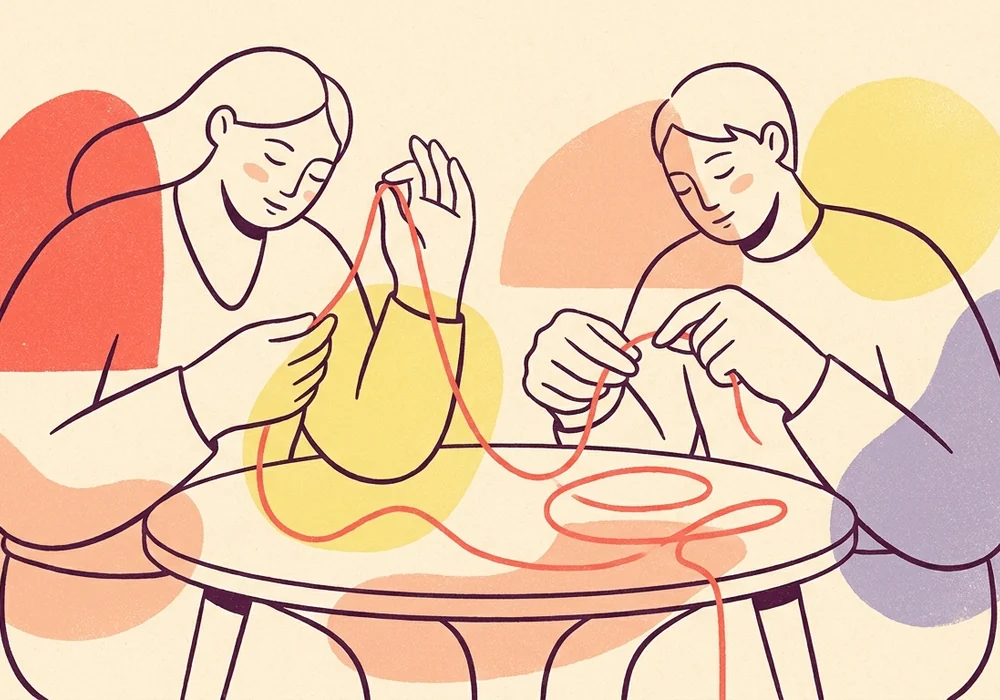
A calm framework for discussing hurt, mismatch, or change before resentment takes over.
This guide is part of the Communicate Clearly collection. For a related perspective, read How to Repair a Friendship After an Argument, or apply the ideas with the Boundary Script Builder.
Prepare the point, not the verdict
Write the specific event, its effect on you, and the change you hope for. Remove mind-reading and global claims. 'When plans change after I leave home, I feel frustrated' gives both people something concrete to work with.
Open collaboratively
Ask for a workable time and signal your purpose: 'I care about our friendship and want to clear up something that has been bothering me.' Then describe rather than prosecute. Pause long enough to hear information that may complicate your first story.
Aim for an agreement
Understanding matters, but decide what happens next. The agreement might be a behavior change, a check-in, more distance, or simply clearer expectations. If the conversation becomes unsafe or contemptuous, ending it is also information.
Prepare a difficult conversation that can go somewhere
Choose one issue
Bring the observable pattern that matters now instead of presenting a lifetime case against the person.
Describe impact and need
Explain what happened inside you and what would make future interactions more workable.
Agree on a next step
End with a specific experiment, decision, follow-up time, or honest acknowledgement of disagreement.
Example: Prepare a difficult conversation that can go somewhere
Try: ‘When our plans changed after I had already travelled, I felt frustrated and unconsidered. Could we confirm before I leave next time?’ This opens a problem without turning it into a verdict on character.
Common questions about how to have a difficult conversation
How do you start a difficult conversation?
Ask for a workable time, name that the relationship matters, and describe one observable issue rather than presenting a verdict about the person.
What outcome should a hard conversation aim for?
Aim for a concrete next step: A behavior change, clearer expectation, check-in, or respectful decision to create distance.
Evidence and further reading
These sources provide research context for claims in this guide. A single study does not settle how every person or relationship will respond.
- Adolescents' and best friend's depressive symptoms and conflict management
A longitudinal study examining problem solving, conflict engagement, and compliance in best-friend relationships.
Bring one observable issue, one honest impact, and one workable request.