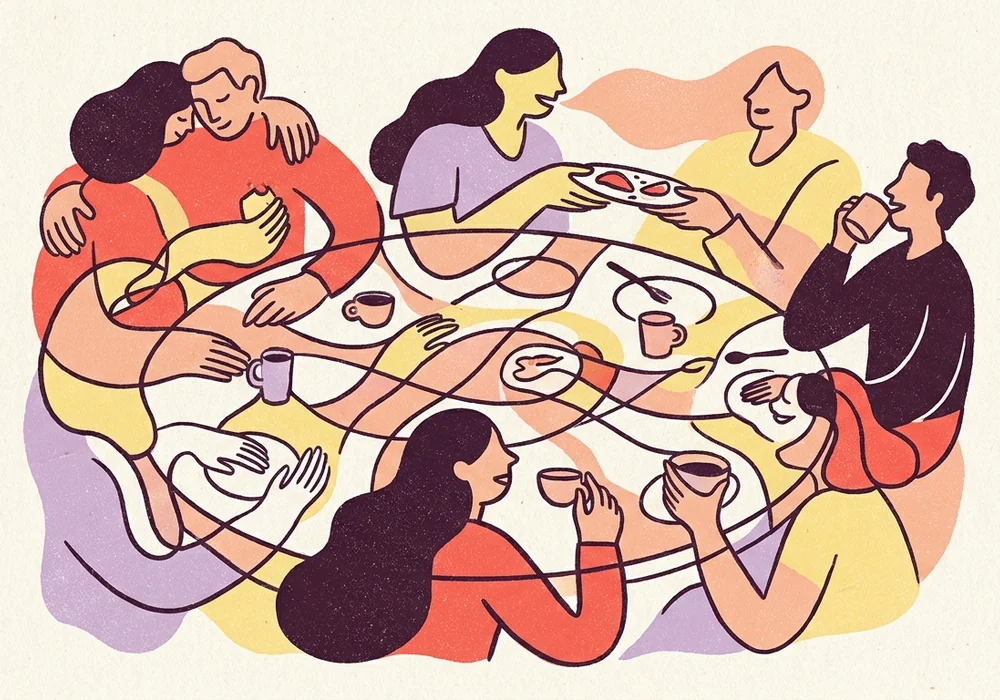
A repeatable path from shared context to actual friendship.
This guide is part of the Read the Connection collection. For a related perspective, read How to Make Friends When You Have None, or apply the ideas with the Conversation Starter Deck.
Choose repeated contact
One-off events can be enjoyable, but recurring classes, volunteering, sports, neighborhood routines, and professional groups provide the repeated exposure that familiarity needs. Choose a context you would still value if friendship develops slowly.
Turn pleasant into personal
Move one step at a time: Learn a name, refer back to something they mentioned, share a small piece of yourself, then propose a specific continuation. 'Want to grab coffee after next week's class?' is easier to answer than 'We should hang out.'
Initiate twice
Many potential friends are receptive but hesitant. If the first invitation is declined without an alternative, try once more later. After that, leave room for reciprocity. This protects both openness and self-respect.
Move from acquaintance to adult friendship
Choose repeatable contact
Join a setting you can attend regularly enough for familiarity to develop without heroic scheduling.
Make a small personal bid
Share a little more, remember what they mentioned, or suggest continuing the conversation.
Offer a specific plan
Name an activity and time window so interest can become an answerable invitation.
Example: Move from acquaintance to adult friendship
After talking at three volunteer shifts, try: ‘I always enjoy our conversations. Would you like to get coffee after next Saturday's shift?’ It is clearer and easier to answer than ‘We should hang out.’
Common questions about how to make friends as an adult
Why is making friends as an adult difficult?
Adult life offers less automatic repeated contact, and many receptive people are hesitant to initiate. Friendship therefore needs deliberate repetition and follow-through.
How do you move from acquaintance to friend?
Refer back to something they shared, reveal a small personal detail, and make one specific, low-pressure invitation tied to your shared context.
Evidence and further reading
These sources provide research context for claims in this guide. A single study does not settle how every person or relationship will respond.
- How many hours does it take to make a friend?
Two studies examining time together, shared activities, everyday talk, and changes in friendship closeness.
Friendship grows when repeated contact meets specific, low-pressure initiative.